Breathe Better, Live Calmer: How Simple Breathing Shapes Your Daily Life
Ever felt overwhelmed by stress, but didn’t know how to pause it? Many have. After years of restless nights and constant anxiety, a surprising discovery changed everything—not a costly treatment or complex therapy, but something done since birth: breathing. Not just any way, but with awareness. How you breathe influences your mood, focus, and long-term well-being. This isn’t about quick fixes. It’s about reshaping a habit so fundamental, yet so overlooked, that it quietly powers every other part of your day. Science now confirms that conscious breathing can shift the body from survival mode to calm, clarity, and control.
The Hidden Power of a Basic Act: What Breathing Really Does to Your Body
Breathing is often seen as automatic—something the body does without thought. While it keeps oxygen flowing and carbon dioxide exiting, its role goes far beyond basic survival. Each breath sends signals to the nervous system, acting like a dimmer switch for stress. When breath is fast and shallow, the body interprets this as danger, activating the sympathetic nervous system—the fight-or-flight response. Heart rate increases, muscles tense, and mental focus narrows. This is useful in true emergencies, but when triggered too often by daily pressures, it wears down both mind and body.
Conversely, slow, deep breathing activates the parasympathetic nervous system—the rest-and-digest state. This shift lowers cortisol, the primary stress hormone, slows the heart rate, and signals safety to the brain. Research shows that intentional breathing patterns can reduce perceived stress within minutes. For example, a study published in the journal Frontiers in Psychology found that just five minutes of diaphragmatic breathing significantly improved attention and reduced anxiety in adults. The breath becomes a direct line to emotional regulation, offering a physiological reset without medication or intervention.
Consider a common moment: standing before a presentation, heart pounding, palms sweating. The body is reacting not to physical threat, but to mental pressure. Yet, the stress response is real. By pausing to take three slow, deep breaths—focusing on a long exhale—many report an immediate sense of calm. This is not imagination. The extended exhale stimulates the vagus nerve, a key pathway in the parasympathetic system, slowing the heart and quieting the mind. What was once an automatic spiral of tension can be gently interrupted by something as simple as how air moves in and out of the lungs.
The power of breath lies in its accessibility. Unlike other health tools that require time, money, or equipment, breathing is always available. It requires no prescription, no special training, and no app. Yet, its effects on blood pressure, mental clarity, and emotional resilience are measurable. Over time, regular practice can retrain the body’s baseline stress response, making calm a more natural state. This is not a cure-all, but a foundational habit—one that supports better sleep, improved digestion, and greater emotional balance. The breath, when used with intention, becomes a silent ally in daily life.
Why Modern Life Makes Us Breathe Wrong
Despite breathing being natural, modern lifestyles have quietly distorted this basic function. Many people now breathe in ways that undermine their health—shallow, rapid breaths from the chest rather than deep, rhythmic movements from the diaphragm. This shift is not genetic; it’s environmental. Long hours spent sitting at desks, staring at screens, and carrying emotional burdens reshape how we breathe. The body adapts to these conditions, often without awareness, leading to a cycle of low energy, poor focus, and chronic tension.
Poor posture is a major contributor. When shoulders slump forward and the spine curves, the lungs have less room to expand. The diaphragm, a dome-shaped muscle beneath the lungs essential for deep breathing, becomes restricted. Instead of engaging this powerful muscle, people rely on smaller muscles in the neck and chest—leading to what experts call “chest breathing.” This method is inefficient, delivering less oxygen and triggering unnecessary stress signals. Over time, the body treats this shallow pattern as normal, even though it mimics the breathing seen during panic or exertion.
Screen time also plays a role. Staring at phones, tablets, or computers often leads to “screen apnea”—a term coined to describe the unconscious habit of holding or shallow breathing while focused on digital tasks. This behavior reduces oxygen flow to the brain, contributing to mental fatigue and irritability. At the same time, constant mental load—from managing household schedules to work deadlines—keeps the nervous system in a low-grade state of alert. The breath becomes a reflection of this internal noise: quick, uneven, and often unnoticed.
The consequences extend beyond discomfort. Chronic shallow breathing can lead to higher levels of carbon dioxide in the blood, reducing oxygen delivery to tissues. This imbalance may contribute to dizziness, fatigue, and difficulty concentrating. Some studies suggest it may even worsen anxiety symptoms over time, creating a feedback loop where stress causes poor breathing, which in turn heightens stress. The good news is that these patterns are not permanent. With awareness and practice, it is possible to return to the deeper, calmer breathing rhythms the body was designed for. The first step is recognizing how daily habits have shaped—and often limited—this essential function.
Spotting Your Breathing Habits: A Quick Self-Check
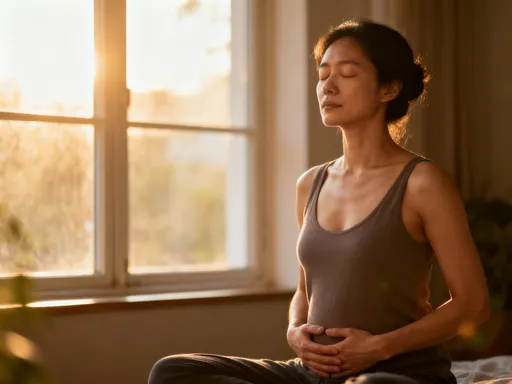
Most people rarely pay attention to how they breathe—until something feels off. The good news is that checking your breathing pattern is simple and requires no tools. A few quiet moments each day can reveal whether your breath is serving you or subtly working against your well-being. Begin by sitting comfortably or lying down. Place one hand on your chest and the other on your belly, just above the navel. Close your eyes and breathe normally, without trying to change anything. Observe where movement occurs.
If the hand on your chest rises more than the one on your belly, you may be relying on chest breathing. Diaphragmatic breathing, the healthier and more efficient method, involves the belly expanding on the inhale as the diaphragm contracts and moves downward. This allows the lungs to fill completely. When the belly moves more than the chest, it’s a sign of deeper, more restorative breathing. Another clue is breath rate. A typical resting breath rate ranges from 12 to 18 breaths per minute. Count your breaths over one minute. If it’s consistently higher, especially when not physically active, it may indicate chronic stress or inefficient breathing.
Other signs of dysfunctional breathing include frequent sighing, mouth breathing during rest, tightness in the shoulders or neck, and waking up with a dry mouth. Sighing, while occasionally natural, can become a subconscious attempt to reset low oxygen levels caused by shallow breaths. Mouth breathing bypasses the nose’s natural filtration and humidification, drying the throat and potentially affecting sleep quality. Shoulder tension often develops when accessory muscles in the neck are overused to lift the chest during inhalation—a sign the diaphragm isn’t doing its job.
It’s important to approach this self-check with kindness. Many people discover they’ve been breathing inefficiently for years, not out of fault, but because of lifestyle demands. The goal is not judgment, but awareness. Recognizing these patterns is the first step toward change. Once you know how you currently breathe, you can begin to guide it toward something more supportive. And the beauty of breath is that even small shifts—like pausing to take one deep belly breath—can begin to retrain the body. Over time, these moments add up, leading to noticeable improvements in energy, mood, and resilience.
The 4-7-8 Method: A Starter Tool for Instant Calm
One of the most accessible breathing techniques for immediate relaxation is the 4-7-8 method. Developed by Dr. Andrew Weil, this practice is based on ancient pranayama principles but adapted for modern life. The pattern is simple: inhale through the nose for a count of four, hold the breath for seven counts, then exhale slowly and completely through the mouth for eight counts. This sequence is repeated for four cycles, typically taking less than two minutes. Though brief, the effect can be profound—many report feeling calmer within a single round.
The science behind the 4-7-8 method lies in the extended exhale. Lengthening the out-breath activates the vagus nerve more strongly than other patterns, sending a clear signal to the brain that the body is safe. This triggers the parasympathetic nervous system, lowering heart rate and blood pressure. The seven-second hold allows carbon dioxide to build slightly in the bloodstream, which can enhance oxygen release to tissues—a natural mechanism that improves efficiency. Over time, regular practice may help reduce nighttime awakenings and improve sleep onset.
Best times to use this technique include moments of rising anxiety, before bedtime, or during transitions—like stepping out of the car before entering a busy home. It can also serve as a morning reset, helping to set a calm tone for the day. To practice safely, sit with a straight spine and relaxed shoulders. Keep the inhale gentle—do not force air into the lungs. The exhale should be smooth and controlled, like releasing air from a balloon. If holding for seven seconds feels too long at first, it’s acceptable to modify the counts (e.g., 4-4-6) and gradually build up.
Consistency matters more than perfection. Practicing the 4-7-8 method once or twice daily, even for just a few cycles, can train the body to shift into calm more easily. It’s not meant to replace other self-care practices but to complement them—like a mental pause button. With time, the body begins to recognize this pattern, making it easier to access calm during stressful moments. For many, this technique becomes a trusted tool, always available, requiring no equipment, and fitting seamlessly into a busy routine.
Box Breathing: The Focus Booster for Daily Challenges
Another powerful technique, known as box breathing or square breathing, has gained attention for its ability to enhance focus and emotional control. Used by military personnel, first responders, and athletes, this method follows a balanced four-part rhythm: inhale for four seconds, hold for four, exhale for four, and hold again for four. Each phase forms one side of the “box,” creating a predictable, grounding pattern. Unlike the 4-7-8 method, which emphasizes relaxation, box breathing promotes mental clarity and steady attention.
The equal timing of each phase helps regulate the nervous system by creating rhythm and predictability. When the mind is scattered or overwhelmed, this structure provides a focal point, reducing mental noise. The brief holds after inhale and exhale allow for stillness, giving the brain a moment to reset. Studies on mindfulness and breathwork suggest that rhythmic breathing can improve executive function—skills like decision-making, impulse control, and working memory. For someone managing a hectic household or navigating a demanding job, this technique offers a way to stay composed under pressure.
Box breathing can be practiced anywhere—while waiting in line, during a work break, or before responding to a difficult message. It requires no special posture, though sitting upright enhances its effectiveness. The key is maintaining a steady, even pace without straining. If four seconds feels too long, the count can be adjusted to three or even two, as long as all four phases remain equal. The goal is not to achieve a specific number but to create balance between breath and mind.
With regular use, box breathing builds resilience. It doesn’t eliminate stress, but it changes the relationship to it. Instead of reacting impulsively to frustration or distraction, a person can pause, engage the breath, and respond with greater intention. Over weeks, this small habit can lead to noticeable changes—fewer reactive moments, better concentration, and a stronger sense of inner stability. Like a mental anchor, it offers a way to return to center, no matter how turbulent the day becomes.
Making Breath a Habit: Integrating Practice into Real Life
Knowing a technique is one thing; making it part of daily life is another. The biggest barrier to consistent breathing practice is not lack of time, but lack of integration. Many people try breathwork in isolation—during a quiet morning or before bed—but struggle to maintain it when life gets busy. The solution lies in habit stacking: linking a new behavior to an existing routine. This method increases adherence by reducing the need for motivation or memory.
For example, pair the 4-7-8 method with brushing your teeth. After finishing, pause for one minute and complete two cycles. Or use box breathing while waiting for the coffee to brew. These moments are already part of the day—no extra time is needed. Other natural cues include stopping at a red light, waiting for a webpage to load, or before checking email. Each of these transitions offers a chance to pause and breathe. The key is choosing a cue that happens regularly and is easy to remember.
Start small. Two to three minutes daily is more sustainable than twenty minutes once a week. Even one conscious breath counts. Over time, the body begins to expect and welcome these pauses. The brain starts to associate certain moments—like unlocking the front door—with a shift into calm. This subtle retraining reduces the overall stress load, making it easier to stay balanced during challenges.
Tracking progress can also help. Use a simple calendar or journal to mark days when you practiced. Not to judge consistency, but to build awareness. Celebrate small wins—like remembering to breathe during a tense phone call. Over time, the practice becomes less of an effort and more of a natural rhythm. Breath is not something to master, but to return to—again and again—like a quiet promise to oneself.
When to Seek Help: Breathing Right vs. Medical Needs
While breathwork offers significant benefits for stress and emotional well-being, it is not a substitute for medical care. Some breathing difficulties stem from clinical conditions such as asthma, chronic obstructive pulmonary disease (COPD), or anxiety disorders. If shortness of breath, chest pain, or persistent dizziness occurs, it is essential to consult a healthcare provider. Similarly, if anxiety interferes with daily functioning—such as difficulty sleeping, constant worry, or avoidance of social situations—professional support is necessary.
Breathing exercises can complement treatment but should not delay diagnosis or therapy. For example, someone with panic disorder may find that controlled breathing reduces the intensity of attacks, but cognitive behavioral therapy (CBT) or medication may be needed for long-term management. The same applies to sleep apnea, where mouth breathing or snoring may indicate a physical obstruction requiring medical intervention.
It’s also important to practice techniques safely. Avoid breathwork during intense physical activity or when feeling lightheaded. Pregnant women or those with cardiovascular conditions should consult a doctor before starting new breathing routines. The goal is to support health, not strain it. When in doubt, seek guidance from a qualified professional such as a respiratory therapist, psychologist, or integrative health coach.
Recognizing the limits of self-help does not diminish the value of breathwork. On the contrary, it strengthens it. By understanding when to use breath as a tool and when to seek help, individuals take responsible charge of their well-being. This balance—between self-care and professional care—is the foundation of true health. Breath can be a powerful ally, but it works best within a broader framework of medical awareness and support.
Your Breath, Your Anchor
Conscious breathing is more than a relaxation trick—it is a daily act of reconnection. In a world that often feels rushed and overwhelming, the breath offers a moment of stillness, always within reach. It requires no cost, no special skill, and no equipment. Yet, its effects ripple through every aspect of life: better sleep, clearer thinking, and greater emotional balance. By reshaping one automatic habit, we gain quiet influence over how we feel, respond, and live.
This is not about perfection. Some days, the breath will be shallow. Some days, the mind will wander. That’s normal. The practice is not to eliminate stress, but to meet it with greater awareness. Each time you pause to breathe with intention, you send a message to your body: I am here. I am safe. I am in control. Over time, these moments accumulate, building resilience from the inside out.
The breath is not a cure, but a companion. It doesn’t erase life’s challenges, but it changes how we carry them. Whether used to calm a racing heart, sharpen focus, or simply pause between tasks, it remains a personal, powerful tool. And in the simplest act of inhaling and exhaling, there is a profound truth: within each of us lies the ability to find calm, one breath at a time.